

- New
- June 12, 2026
How to Install Fiber Cement Board: Step-by-Step Guide for UAE Contractors
The construction industry’s increasing demand for low-maintenance and long-lasting building materials that are combined with fire resistance is driving demand for fiber cement boards. As per Grand View Research, the global market size of fiber cement board was USD 12.09 billion in 2023 and is projected to reach USD 27.19 billion by 2030, growing at a 12.5% CAGR within the 2024-2030 period. The increasing adoption of fiber cement sheets is a significant contributor to market growth.
Before discussing installation, it is important to understand what fiber cement board is, how it is manufactured, and the different board types available for construction applications.
Need to know how to install fiber cement board? Since the fibre cement board installation procedure plays a vital role in meeting safety, quality, and durability standards, it is important to follow the recommended installation procedure. From setting up the supporting structure and installing the boards to finishing the final framing works, each step counts towards ensuring the longevity and perfection of the finished product.
This post will guide contractors and builders through the recommended installation procedure to produce superior workmanship and fewer maintenance issues in the future.
Geminite offers fiber cement boards that cater to the needs of the construction sector when it comes to modern, efficient, and high-quality building solutions.
At a Glance
Common Applications of Fiber Cement Boards
Fiber cement boards are widely used as:
- Interior partition walls
- External cladding systems
- Wallpaper applications
- Wet area linings
- Façade decorative elements
- Commercial fit-out projects
The demand for FCB installation Abu Dhabi and throughout the UAE reveals a market preference for resisting wear-out and requiring less maintenance in building materials.
For a broader understanding of fiber cement board benefits, applications, specifications, and selection criteria, explore our complete guide to fiber cement boards in UAE.
Selecting the correct board density before installation is critical. Read Medium Density vs High Density Fiber Cement Board: Which Do You Need? to understand which density is suitable for partitions, ceilings, facades, flooring, and wet areas.
Step-by-Step Guide on How to Install Fiber Cement Board
A guide on how to install fiber cement board would involve completing a series of tasks to ensure it is safe, accurate, and can last for years to come.
Step 1: Prepare the Surface and Framework
Before progressing, this fiber cement board installation guide UAE confirms that the supporting framework is ready for the installation.
The framework needs to:
- Be level and straight
- Be structurally sound
- Be aligned correctly
- Be dry enough and free from damage
Galvanized steel framing is often used in UAE building construction projects, as it is more resistant to corrosion and well-suited for long-term use.
Recommended Stud Spacing
Application | Typical Stud Spacing |
Internal partitions | 400–600 mm |
Ceiling systems | As per project specifications |
External applications | Based on wind load requirements |
Always check with manufacturers for any project-specific requirements.
Step 2: Measure and Mark the Boards
Accurate measurements help to reduce waste and ensure a better final installation.
When measuring:
- Measure the installation area accurately.
- Mark the cutting lines.
- Check your measurements.
- Lay out the board installation to minimise joints where possible.
For larger commercial projects, such as FCB installation Abu Dhabi, contractors will often lay
out the FCB installation in advance to reduce on-site work.
Choosing the right steps in this phase will assist you in installing faster and reducing material usage.
Material planning is equally important, and understanding current fiber cement board pricing can help contractors estimate project budgets and procurement requirements more accurately.
Selecting the correct fiber cement board size and thickness before installation can improve efficiency and reduce material wastage on site.
Step 3: Cut the Fiber Cement Boards Correctly
Knowing how to install cement board, it’s also important to know how to saw them correctly.
Safer Cutting Tips
- Use the blades that are specifically made for cement boards,
- Make proper board support while cutting.
- Cut the boards in a well-ventilated area.
- Reduce dust as much as possible.
- Inspect the edges of the boards for damage before installation.
Safety should always remain a priority during this process.
The Occupational Safety and Health Administration (OSHA) recommends and recommends using dust-control measures and correct personal protective equipment, including eye protection, hearing protection and respirator, when cutting any product containing crystalline silica.
Follow safe work practices and wear proper personal protective equipment, such as proper eye protection, and proper respirator.
Personal protective equipment checklist
- Dust mask or respirator
- Safety goggles
- Gloves
- Protective gear
- Hearing protection for power tool work
These basic guidelines will help to establish a safer working environment for installation crews.
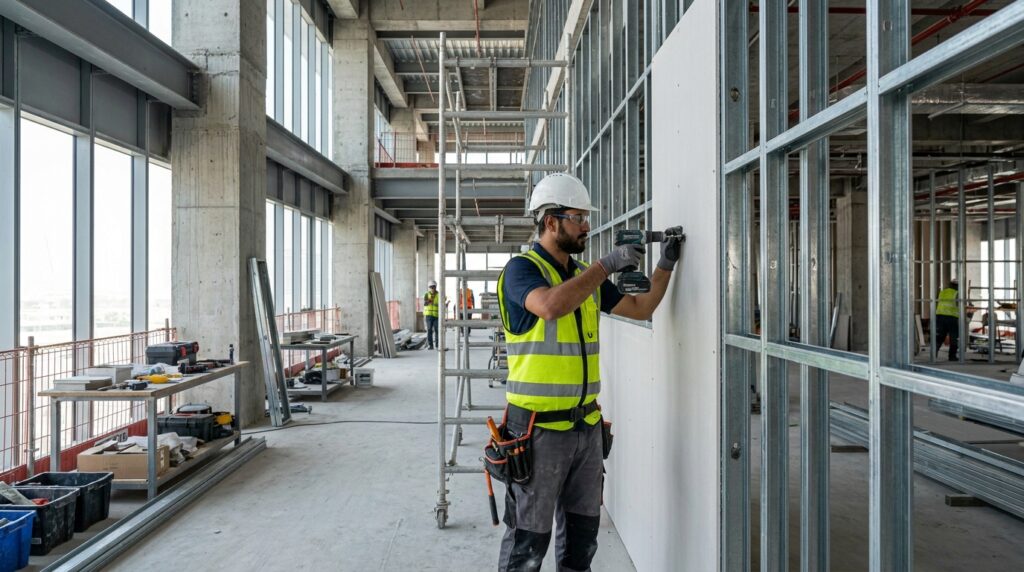
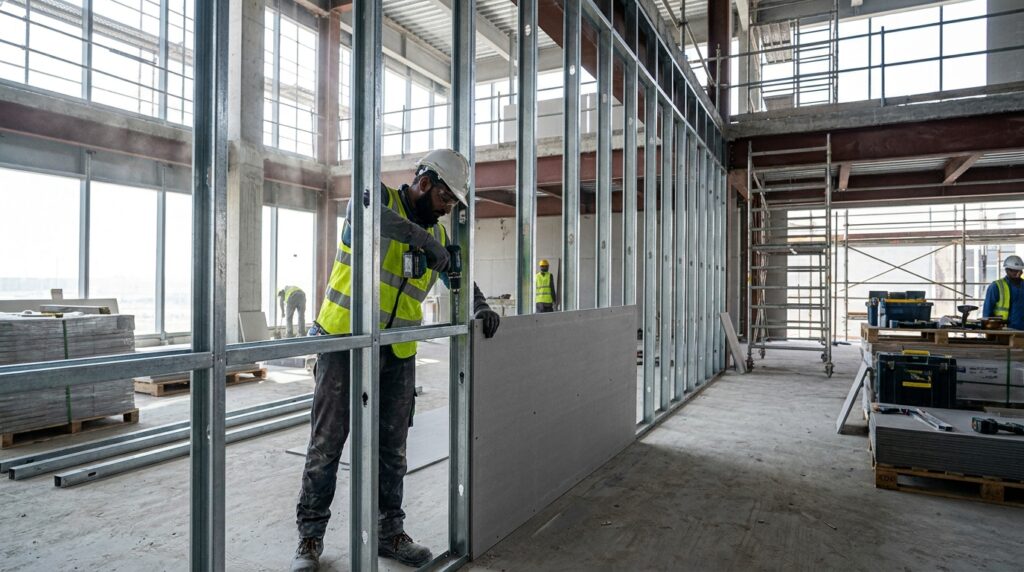
Step 4: Mount and Fasten the Boards
Once the boards are ready, they are then laid onto the framework.
This process is one of the most essential parts of cement board attaching method.
- Starting to fasten from any corner of the board.
- Make sure you keep the board level at all times.
- Use the approved fiber cement and appropriate fasteners.
- Follow consistent fixing patterns.
- Do not overtighten screws.
Screw Fixing Advice
- Place screws according to recommendations.
- Keep fasteners at the correct distance from the board edge.
- Screw heads flush with the board.
- Do not overdrive fasteners.
Improper fixing methodology can compromise the strength of the fix and influence the appearance of the surface end product.
Contractor Installation Checklist
Checked before proceeding:
- Framework alignment,
- Measurements made,
- Boards cut to size,
- Correct safety equipment employed,
- Proper fixing,
- Surface levelness
A comprehensive quality check at this stage can reduce rework and lead to a superior finished project.
Standards such as ASTM C1186 describe flat fiber cement sheets as a material for use in character surfaces of buildings and accommodate their use for both exterior and interior usage.
By understanding what is required to install a fiber cement board correctly from the outset of the project, contractors can achieve higher productivity and quality across a range of projects.
Step 5: Ensure correct joint gaps
A crucial part of how to install fiber cement board is to maintain an appropriate gap between boards for boards to accommodate small movements resulting from temperature changes and help avoid cracking.
Particularly in the UAE, this final step is crucial, as buildings are subjected to high temperatures year-round.
Joint Installation Tips
- Use the manufacturer’s recommended joint interval.
- Make sure the joints are clean before installing any finishes.
- Use approved sealants when needed.
- Apply joint tape on installations requiring a seamless finish.
Industry guidance states that properly spaced expansion gaps between fiber-cement boards can enhance long-term performance and minimize damage caused by stress. This is particularly important in exterior installations where weather variations are a factor.
Step 6: Seal, Finish, and Inspect the Installation
The second-to-last step in the ” How to Install Fiber Cement Board guide is to finish the joints and then inspect the entire installation.
Finishing may involve:
- Joint compound
- Surface painting
- Decorative coatings
- Waterproofing of wet areas
Final Inspection Checklist
Before completing the installation, confirm that you have checked:
- Boards are firmly fixed
- Screw heads are aligned correctly
- Joint treatments are finished
- Surfaces are level
- There are no cracks or damage to the edges
- The finishes align with the project specifications
A thorough inspection will catch problems early and cut costs down the line.
Common Mistakes to Avoid During Installation
Even experienced installers can encounter obstacles if they don’t follow instructions to the letter. Be aware of these typical problems to make any fiber cement board installation guide UAE business more successful.
1. Poor Preparation of the Framework
Installing boards on an uneven or unstable framework can compromise alignment and structural performance.
2. Using Incorrect Fasteners
Standard screws may not provide the level of support required for fiber cement applications. Always choose fixings approved by the installer for the system being used.
3. Skipping Joint Gaps
Omitting joint gaps or sealants can increase the potential for cracking and moisture penetration.
4. Over-Driving Fasteners
If they’re overdriven, the fasteners can damage the board surface and compromise the fixing.
5. Unsafe Cutting Practices
The dust that accumulates during the cutting process should be managed appropriately. OSHA requires employers to provide effective dust-control measures and suitable protection arrangements for employees who are working with materials containing crystalline silica.
Why Choose Geminite in Fiber Cement Board Solutions?
The contractors involved in the construction industry need building materials that offer a blend of standardization and quality. Geminite offers fiber-cement board solutions, designed to meet the ever-changing demands of modern construction projects.
- High-quality products suitable for conditions in UAE
- Suitable for many standard residential and commercial applications
- Reliable product availability
- Supporting your projects and teams
- Durability matters
Choosing the right materials is just as important as knowing how to install fiber cement board properly. When quality products and proper installation practices go together, then your project can benefit.
Taking the time to plan the installation before you start work can help to reduce material waste, improve your productivity and reduce variability in workmanship throughout the project.
Need reliable fiber cement board solutions for your next project? Check out Geminite’s product range to help contractors in the UAE build confidence in their projects.
FAQs
- How do you install fiber cement board?
The installation process involves preparing the framework, measuring and cutting the boards, fixing them, maintaining the joint gap, and completing the finish as recommended by the manufacturers.
- Which is the best way to fix cement board?
The best way to fix the cement board depends on the application. In most cases, this will be by using approved screws fixed onto a properly prepared steel framing system.
- Are fiber cement boards suitable for exterior use?
Yes. The boards are suitable for exterior applications such as cladding/facade systems as a result of their durability and weather resistance.
- Will the FCB installation be suitable for the UAE weather conditions?
Indeed. When correctly installed, these boards work well in extreme weather and are used for FCB fitting Abu Dhabi and other projects in the UAE.
- What is the importance of joint gaps during installation?
They allow for some movement due to temperature changes and help prevent cracking over time.
At a Glance