

- New
- November 20, 2024
How to Seal Cement Board Joints and Edges
Did you know that untreated fibre cement boards, such as Silbonit, will absorb 25 of water after 24 hours of soaking? Cement Board Fabricators: If you need to seal cement board seams and edges, use approved mortar to fill the gaps, apply mesh tape, and seal any exposed edges with an appropriate product where necessary.
Fibre cement boards are available at Geminite for indoor and outdoor use. cement board joint sealing will help limit cracks, prevent moisture damage and save costly repairs.
If you are still comparing wall construction options, read our guide to cement board or brick wall in the UAE to understand the differences in installation speed and overall cost.
At a Glance
Why should you seal cement board joints and edges?
Untreated seams create weak points, while raw edges may cause moisture damage.
They can produce cracks and an uneven finish. Proper cement board joint sealing will help spread the load on the seams. Smooth surface finishes can be achieved if cement board joints are well sealed.
Proper board fixing is equally important before joint treatment. Follow our guide to cement board screws and spacing to ensure secure installation and prevent unnecessary movement between panels.
Edge protection is necessary if the boards will be installed in areas that are exposed to extreme heat and humidity.
Before choosing a sealing method, understand the different applications and specifications covered in our complete guide to cement board in UAE.
Before installation, check the cement board weight per sheet in UAE to plan safe handling, transportation and proper support during fixing.
You will need the following tools and materials:
- Alkali-resistant cement board joint tape
- Approved cement board jointing compound or thin-set mortar.
- Flat trowel and mixing bucket
- Clean sponge and small brush
- Board-approved edge sealer
- Waterproof membrane
- Gloves and other safety gear
How to Seal Cement Board Joints in 4 Steps
Before sealing, make sure the boards have been cut correctly and their edges are clean. Read our guide on how to cut cement board safely on UAE sites for the right tools and dust-control practices.
1. Clean and Check the Boards
Rinse off any dust with a damp sponge. Make sure the boards are flat and properly supported. The screw heads should be flush with the surface and the gaps left as instructed in the installation instructions.
2. Fill the Gaps
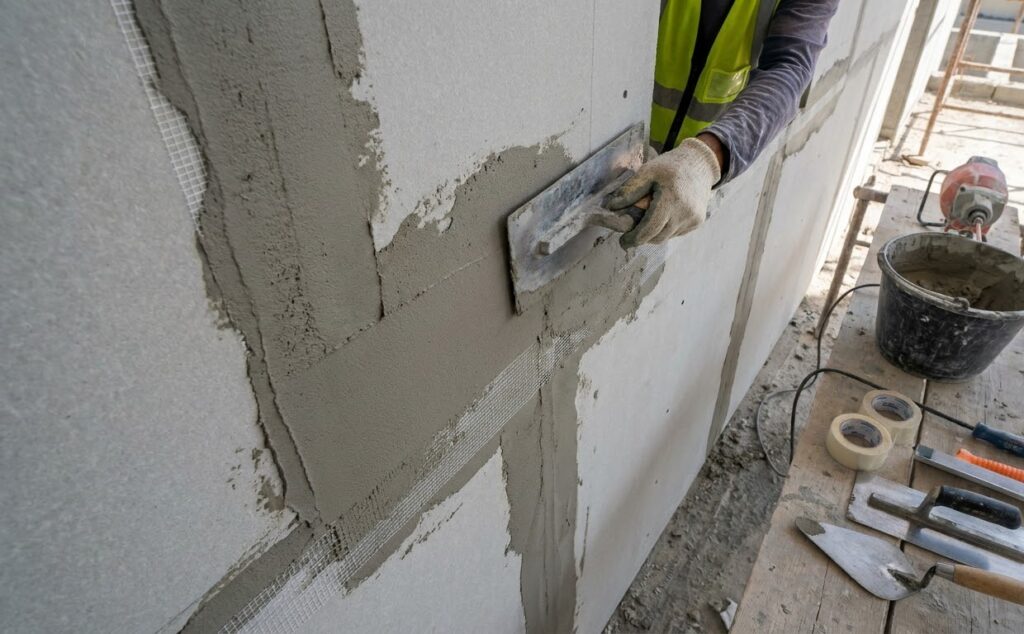
Combine the approved mortar as instructed on the package. With a trowel, pack the jointing compound in the gaps. You should not use a drywall filler instead of a cement board jointing compound under the tiles.
3. Apply the Joint Tape
Spread the joint tape over the freshly laid mortar and position it right in the middle of each seam. Press it down firmly and then apply a thin coat of mortar over the mesh to create an even surface.
4. Let the Joints Cure
Take time to remove excess mortar before it starts to dry. Let the joints cure following the instructions provided with the product. After the joints are set, check for gaps, bumps, or other issues with the tape.
Before applying the finishing touch to the cement board, make sure there are no holes or loose tape.
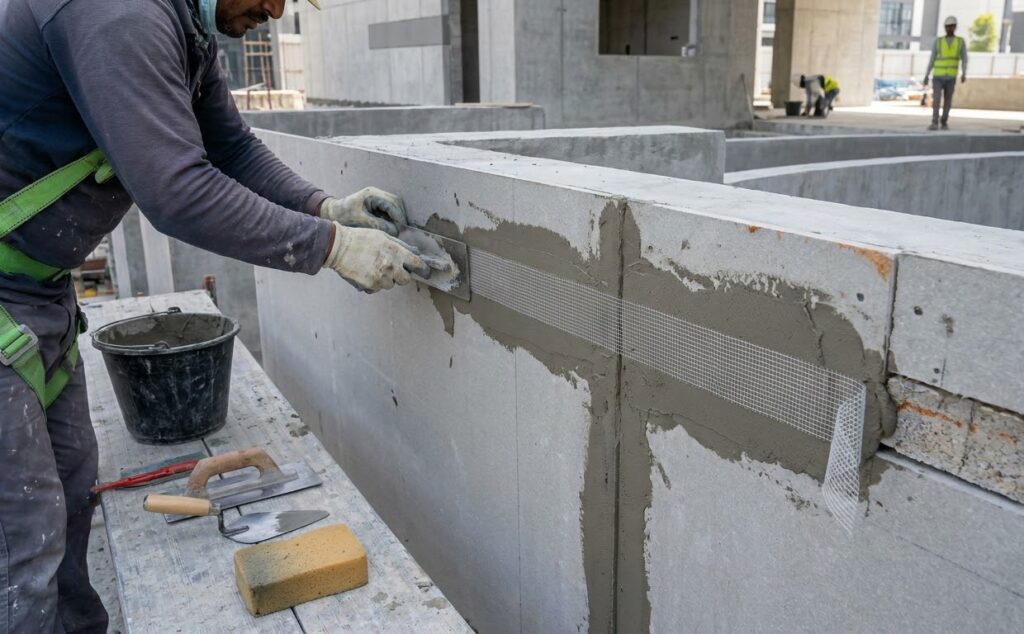
How to Seal Cement Board Edges:
Knowing how to seal cement board edges will help prevent surfaces from getting wet.
Before applying an edge sealer, check the recommended cement board thickness for your application to ensure the selected board meets the project requirements.
Steps to Prepare Boards for Edge Coating
- Clean the edges of the boards to remove any dust.
- Ensure that the edges are dry.
- Apply an even coat of approved edge sealer to the edges.
- Allow the coat of edge sealer to dry before you install the boards.
Leave open drainage and movement gaps for fibre cement cladding and exterior facade panels.
To waterproof cement board joints in showers, use an approved waterproofing system. Mortar and mesh tape alone cannot prevent water from passing through.
Common sealing errors to avoid:
- Using paper tape instead of alkali-resistant mesh.
- Filling movement joints with rigid mortar.
- Using the wrong edge sealer.
- Not allowing for required drying time.
The right materials and technique are essential for cement board joint sealing. Applying a protective finish to the edges and seams of a cement board joint will ensure a smooth finish that will last.
Find our full range of fibre cement boards, or speak to our technical team for help with your next project.
FAQs
1. Can silicone be used to seal joints on cement boards?
Yes, but only where the board manufacturer has approved the use of silicone. Standard tiled seam joints usually require approved mortar and mesh tape.
2. Do all cement board edges need to be sealed?
No. Some edge sealing is required if the board type is not sealed, the finish and application are open-ended, or the cement board is installed in an open environment. Before using a sealer, always refer to the manufacturer’s instructions.
3. How long do cement board joints need to dry before tiling?
The dry time of the cement board joints depends on the type of mortar that is used, as well as the installation system. Refer to the manufacturer’s instructions before tiling.
At a Glance