

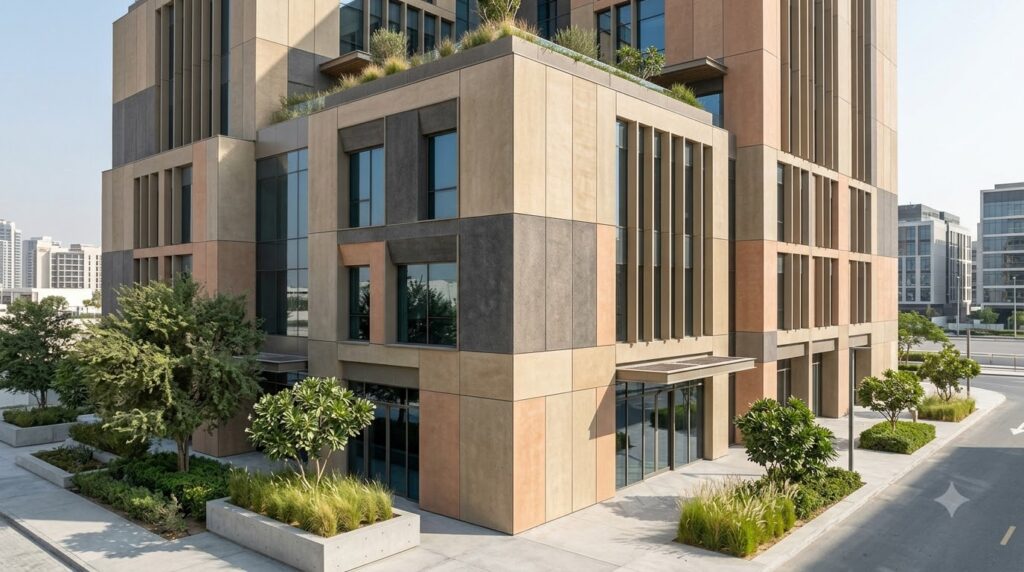
- New
- August 31, 2026
Why Are Fiber Cement Boards Considered Eco-Friendly Construction Materials?
Eco-friendly fiber cement boards use abundant natural materials and reduce waste throughout their lifecycle. Builders choose them for sustainable projects that meet green building standards. These boards support environmental goals while delivering strong performance in construction applications.
This durability starts with responsible raw material choices and continues through long service life.
At a Glance
Made from Abundant Natural Resources
Eco-friendly fiber cement boards contain cement, sand, and cellulose fibers found worldwide. These ingredients require minimal processing compared to rare metals or tropical hardwoods. Local sourcing reduces transportation emissions and supports regional economies.
Sand and cement derive from plentiful deposits with established supply chains. Cellulose comes from fast-growing plants rather than slow-maturing trees. Production avoids deforestation pressures that plague traditional wood products.
Manufacturing processes use established technologies that manufacturers refine over decades. Energy demands stay lower than firing clay bricks or extruding aluminum panels. Water recycling systems further reduce resource consumption during production.
Incorporates Recycled and Waste Materials
Many producers blend fly ash from power plants into the mix. This industrial byproduct replaces virgin materials while strengthening final boards. Each ton of fly ash used diverts waste from landfills and cuts cement production needs.
Recycled cellulose fibers from paper industry waste replace virgin pulp. Post-consumer paper products find a second life, strengthening construction panels. These practices lower embodied carbon without compromising structural performance.
Glass fibers from recycled bottles sometimes reinforce high-performance boards. Mineral waste products fill similar roles in specialty formulations. Circular material flows reduce demand for new resource extraction across multiple industries.
Lower Energy Production Process
Autoclave curing requires less energy than high-temperature kiln firing for bricks. Steam processes operate efficiently with heat recovery systems. Electricity demands drop further when factories install solar panels on rooftops.
Modern plants capture waste heat for water heating and pre-curing stages. Cogeneration systems produce power onsite while minimizing transmission losses. These optimizations cut greenhouse gas emissions per board produced.
Zero liquid discharge policies recycle all process water. Treatment systems purify wastewater for reuse in mixing and cleaning operations. Freshwater consumption drops dramatically compared to wet-cast concrete production.
Exceptional Durability Reduces Replacement
Sustainable wall boards last 40-50 years before replacement needs arise. Wood siding requires repainting every 5-7 years and full replacement after 20 years. Vinyl panels crack and fade within 15 years under sun exposure.
Longevity means fewer manufacturing cycles over building lifetimes. Each avoided replacement saves raw materials, energy, and landfill space. Property owners redirect maintenance budgets toward energy efficiency upgrades.
Durable surfaces resist impacts that damage brittle alternatives. Hailstones and flying debris cause superficial marks rather than penetration failures. Buildings maintain weathertight envelopes without emergency repairs.
Energy Efficiency in Building Operation
Thermal mass properties moderate indoor temperatures naturally. Daytime heat absorption followed by evening release reduces air conditioning peaks. Heating demands drop similarly in cooler months.
Low-maintenance wall boards pair well with ventilated facade systems. Air gaps behind panels create natural convection currents that exhaust hot air. Building envelopes stay cooler while reducing mechanical cooling loads.
Reflective surface options bounce sunlight away from structures. Darker colors still outperform absorptive materials through density advantages. Annual energy savings accumulate into significant carbon reductions over decades.
Minimal Chemical Treatments Required
Pest resistance eliminates wood preservatives and termite barriers. No chromated copper arsenate or borate treatments enter waste streams. Volatile organic compounds from paints and stains become unnecessary.
Fire retardancy proves inherent rather than chemically derived. No halogenated compounds or intumescent coatings create disposal challenges. Material safety data sheets list simple, stable ingredients.
Cleaning requires plain water and mild soap solutions. Abrasive cleaners damage finishes on metal or plastic alternatives. Sustainable maintenance preserves both appearance and environmental quality.
Full Recyclability at End of Life
Demolition waste crushes easily for reuse in road base or new board production. Cementitious composition crushes into aggregate without separation processing. Asphalt plants accept ground panels as filler material.
Landfill volumes shrink dramatically compared to composite materials. No plastic binders prevent recycling like vinyl or aluminum-plastic panels. Single-stream processing simplifies waste handling operations.
Regional crushing facilities process large demolition projects efficiently. Recycled content percentages rise as more old panels enter waste streams. Closed-loop systems emerge as volume scales up.
Supports Green Building Certifications
LEED and similar programs award points for low-emitting materials. Eco-friendly fiber cement boards qualify through simple compositions. No formaldehyde or plasticizers appear on ingredient lists.
Regional materials programs favor locally produced boards. Transportation emissions drop when factories operate near construction sites. Supply chain transparency satisfies documentation requirements.
Life cycle assessments confirm low environmental impacts. Cradle-to-grave analyses account for 80 percent less embodied carbon than alternatives. Certification bodies publish comparative data supporting material choices.
Reduces Operational Carbon Emissions
Lower energy bills translate directly into fewer power plant emissions. Grid decarbonization amplifies savings as renewable percentages rise.
Water conservation lowers pumping and treatment energy demands. Graywater systems pair naturally with durable wet area applications. Integrated sustainability exceeds simple material substitutions.
Long-term ownership costs drop through avoided replacements. Capital budgets shift toward renewable energy installations. Corporate sustainability reports highlight quantifiable environmental achievements.
Lifecycle Environmental Superiority
Cradle-to-grave analyses confirm the lowest total impacts among cladding options. Production phase emissions amortize over extended service lives. Demolition and recycling phases add minimal burdens.
Comparative studies consistently rank fiber cement highest across metrics. Acid rain potential, eutrophication, and smog formation all show advantages. Balanced performance satisfies multiple environmental priorities.
Independent verifiers publish environmental product declarations. Architects access third-party data for informed specifications. Transparent documentation builds trust across supply chains.
Conclusion
Eco-friendly fiber cement boards earn their sustainable reputation through abundant materials, recycled content, energy-efficient production, and unmatched durability. Sustainable wall boards reduce environmental impacts across entire building lifecycles while meeting performance demands.
Low-maintenance wall boards deliver green benefits alongside practical advantages.
Contact Geminite for eco-friendly fiber cement boards that support your sustainability goals.
Frequently Asked Questions
Do eco-friendly fiber cement boards contain recycled materials?
Yes, fly ash from power plants and recycled cellulose fibers reduce waste. These inputs strengthen boards while diverting landfill materials.
How do sustainable wall boards save building energy?
Thermal mass absorbs daytime heat and releases it at night. This reduces air conditioning peaks and heating needs naturally.
Are eco-friendly fiber cement boards recyclable?
Crushed boards are reused as road base or new production inputs. High recyclability rates exceed composite material alternatives.
Why do eco-friendly fiber cement boards need less maintenance?
Durable surfaces resist weathering without chemical treatments. Low-maintenance wall boards cut replacement cycles significantly.
At a Glance