

- New
- November 24, 2025
Drywall System Enhancements with Cement Board Technology
Why do Drywall Systems Need an Upgrade?
Drywall systems are the backbone of most interior walls, offering structure, aesthetics, and utility. Yet as construction demands evolve, traditional drywall materials are being pushed beyond their limits, especially in high-traffic, high-moisture, or fire-sensitive areas.
This has led to the growing use of cement board technology as an upgrade within modern drywall systems. Cement board isn’t here to replace drywall entirely but to strengthen its performance where conventional solutions fall short. For contractors and interior designers, this shift offers more flexibility, resilience, and safety without changing the basic structure of their workflow.
At a Glance
- 1. What Makes Cement Board Different
- 2. Better Moisture Resistance for Wet Areas
- 3.Improving Fire Safety in Wall Assemblies
- 4. Higher Impact Resistance for High-Traffic Areas
- 5. Stronger Surface for Finishes
- 6.Installation Flexibility for Mixed-Use Projects
- 7.Aesthetic and Functional Benefits in Design
- 8.Supporting Modern Home Features
- 9.Dimensional Stability for Long-Term Performance
- 10.A Smart Choice for Long-Term Value
What Makes Cement Board Different
Unlike gypsum boards that can absorb moisture or break under pressure, cement board offers a more stable surface that stays intact under demanding conditions. It’s made from a blend of cement, sand, and reinforcing fibers, which makes it highly resistant to water, mold, and impact.
When used strategically within drywall systems, cement board strengthens wall assemblies and prolongs their lifespan. This is especially valuable in projects where quality and durability can’t be compromised.
Better Moisture Resistance for Wet Areas
One of the most important advantages of integrating cement board into drywall systems is moisture resistance. While gypsum boards work fine in dry spaces like bedrooms and hallways, they tend to swell, soften, or even crumble when exposed to consistent humidity. This makes them unsuitable for bathrooms, basements, kitchens, and laundry rooms.
Cement board, on the other hand, remains unaffected by moisture. It does not absorb water, nor does it support mold growth. When used in shower enclosures, behind tiles, or around plumbing-heavy areas, it ensures that the walls remain solid and safe over time.
Improving Fire Safety in Wall Assemblies
Beyond moisture resistance, cement board also plays a significant role in improving fire safety. Many cement board products are non-combustible and can act as a fire barrier in multi-family housing, hotels, hospitals, and schools. When added to a drywall assembly, cement board delays the spread of fire, giving occupants more time to evacuate and reducing potential damage.
This isn’t just a technical benefit; it is a safety feature that adds real value to any project that needs to meet fire code regulations or go through stringent inspections.
Higher Impact Resistance for High-Traffic Areas
Durability is another area where cement board enhances traditional drywall systems. Gypsum boards can dent, crack, or break when impacted by heavy objects or rough handling. This is particularly problematic in spaces like hospital corridors, school hallways, retail stores, and warehouses.
Cement board offers a much higher impact resistance, making it suitable for high-traffic areas. It can be used as an underlayment behind wall tiles or as a base for finishes that need a sturdy surface.
Stronger Surface for Finishes
Another reason contractors and designers are increasingly adopting cement board technology in drywall systems is its compatibility with various finishes. Cement board provides a strong, stable surface for paint, tiles, and other decorative treatments.
Unlike gypsum board, which may bubble or peel when exposed to adhesives or water-based products, cement board allows for cleaner application and longer-lasting results. The board holds tiles firmly in place and prevents warping beneath heavy materials.
Installation Flexibility for Mixed-Use Projects
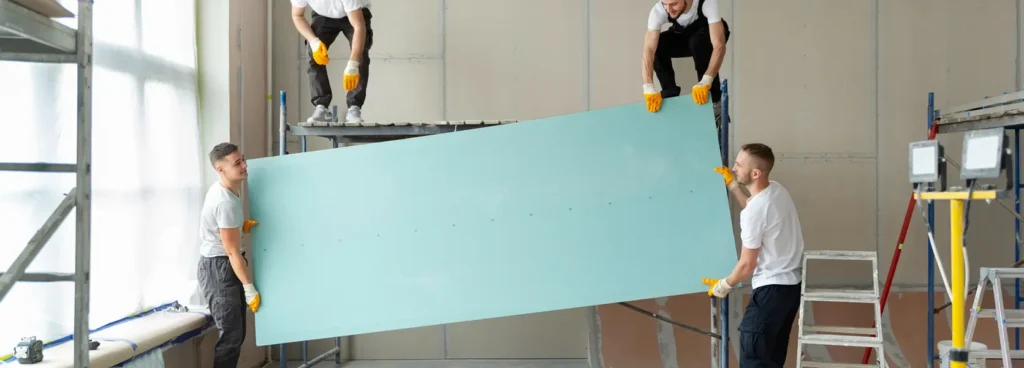
From an installation standpoint, cement board integrates easily into existing drywall frameworks. It can be cut with carbide tools, fastened using corrosion-resistant screws, and attached to standard framing structures. While it is heavier than gypsum, its added strength makes it worth the effort in areas that demand long-term reliability.
For mixed-use interiors, contractors often apply cement board only in moisture or damage-prone sections, while continuing to use gypsum elsewhere. This hybrid approach allows teams to stay within budget while improving overall performance.
Aesthetic and Functional Benefits in Design
In hospitality projects, designers are turning to cement board-backed drywall to maintain aesthetics in humid environments. Whether it’s an ensuite bathroom in a resort suite or a tiled wall near a hotel spa, these areas need a substrate that won’t degrade behind the surface. The use of cement board ensures that the visual appeal of finishes is supported by a structure that resists damage from within.
Supporting Modern Home Features
In residential homes, the growing popularity of open kitchens, walk-in showers, and energy-efficient insulation increases the need for drywall systems that can handle fluctuating moisture levels. Cement board plays a crucial role in making these modern conveniences sustainable.
When used behind kitchen backsplashes, under bathroom tiles, or in laundry areas, cement board creates a barrier that helps protect the rest of the structure from long-term water damage.
Dimensional Stability for Long-Term Performance
Interior designers working with cement board in drywall systems also appreciate the material’s dimensional stability. It doesn’t expand or contract with humidity or temperature changes, which helps maintain smooth wall finishes and prevents unsightly cracks at the joints.
This reliability is crucial when planning for large-format tiles or precision-fitted cabinetry, where even slight shifting can ruin the design.
A Smart Choice for Long-Term Value
Contractors benefit from the fact that cement board, once installed, requires very little follow-up. It does not need regular maintenance and does not degrade under normal wear and tear. Its lifespan is significantly longer than most other drywall materials in challenging environments, which means fewer replacements and happier clients.
When you consider the full picture, cement board is a problem-solver for modern construction challenges. Whether the concern is water, impact, fire, or finish durability, cement board strengthens the system without complicating the process.
Discover the right cement board products for your next project at Geminite. Build better interiors from the inside out.
This reliability is crucial when planning for large-format tiles or precision-fitted cabinetry, where even slight shifting can ruin the design.